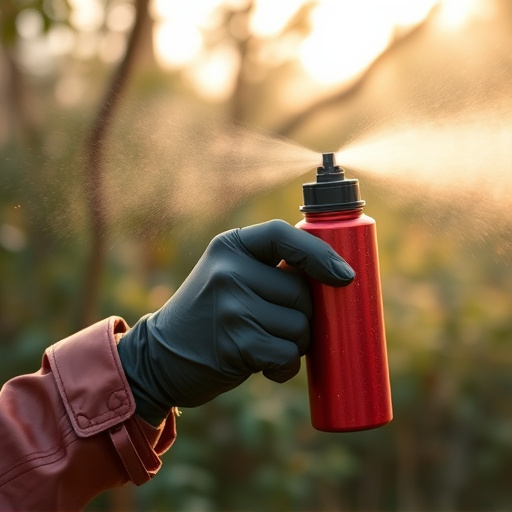
Environmental conditions, including temperature, humidity, wind, and air quality, significantly affect pepper spray's viscosity, volatility, range, and potency. Extreme weather impacts its performance, with higher temperatures enhancing potency but also potentially degrading capsaicin over time. High humidity alters spray pattern and concentration. Manufacturers must test under controlled conditions to ensure consistent protection, as environmental factors can alter the active ingredient's concentration and distribution.
“Concentrated pepper extract, a powerful defense product designed to deter aggressors, relies on precise formulations and environmental conditions for optimal effectiveness. This article delves into the intricate details of pepper spray composition and explores how environmental factors, such as temperature and humidity, significantly impact its potency. Understanding these variables is crucial for ensuring the safety and reliability of pepper extract-based defense products in various settings.”
- Understanding Pepper Spray Composition
- Environmental Factors Impact Effectiveness
- Temperature's Role in Pepper Extract Potency
- Humidity and Its Influence on Spray Performance
- Testing Conditions for Optimal Defense Product Safety
Understanding Pepper Spray Composition
Pepper spray, a popular defense product, is a concentrated extract of capsaicin, the active ingredient found in peppers. Its composition typically includes capsaicin in a carrier solution, often consisting of water, ethanol, and other additives. The concentration of capsaicin varies, with higher concentrations providing longer-lasting effects. However, environmental conditions significantly affect pepper spray’s performance and effectiveness.
Temperature plays a crucial role; extreme heat or cold can alter the spray’s viscosity and volatility, impacting its range and potency. Humidity also matters; in moist environments, the solution may evaporate slower, extending the spray’s duration, while low humidity can cause it to dry out faster. Additionally, wind and air currents can affect the spray’s trajectory and coverage area, making it less precise. Understanding these environmental factors is essential for users to ensure optimal performance when relying on pepper spray as a defense mechanism.
Environmental Factors Impact Effectiveness
The effectiveness of a concentrated pepper extract defense product, like pepper spray, can be significantly influenced by various environmental conditions. Temperature plays a crucial role; extreme heat or cold can affect the spray’s viscosity and potency, making it less effective during intense weather events. Humidity levels are another critical factor; high humidity may reduce the spray’s range and penetration due to the formation of mist or fog.
Moreover, wind patterns can carry away the spray before it reaches its target, while certain air currents could enhance its accuracy. These environmental factors must be considered when deploying pepper spray for self-defense, as they can significantly alter the product’s performance and reliability in real-world scenarios.
Temperature's Role in Pepper Extract Potency
The potency and effectiveness of pepper extract, a popular defense product, are significantly influenced by environmental conditions, with temperature playing a pivotal role. In general, higher temperatures enhance the active ingredients’ bioavailability, making the pepper spray more potent. This is because heat increases the rate at which the capsaicinoids, the primary active compounds in pepper extract, are released from the spice. As a result, users may experience a more intense and immediate defense effect when using pepper spray on warmer days or in hotter environments.
However, it’s essential to consider that extreme temperatures can also cause degradation of these compounds over time. Prolonged exposure to heat or direct sunlight might reduce the concentration and potency of capsaicinoids in the extract. Therefore, manufacturers often recommend storage in cool, dry places to preserve the product’s effectiveness, especially under conditions where environmental temperatures fluctuate significantly. Understanding these nuances ensures that pepper spray maintains its intended level of protection when needed most.
Humidity and Its Influence on Spray Performance
Humidity plays a significant role in the performance of pepper spray, an essential defense product designed to incapacitate assailants temporarily. In optimal conditions, this potent compound is highly effective due to its unique chemical composition. However, environmental factors like humidity can significantly alter its spray pattern and impact. When the air is humid, the moisture content in the atmosphere affects the concentration and dispersal of pepper spray particles. This can lead to reduced range and accuracy, as the droplets may evaporate or disperse faster than intended, making it less effective for self-defense purposes.
Understanding these environmental conditions is crucial when considering the use of pepper spray as a defense mechanism. Users need to be aware that factors like humidity can influence the product’s performance, potentially reducing its effectiveness during certain weather conditions. Knowing these nuances allows individuals to make informed decisions and adapt their strategies accordingly, ensuring maximum protection in various environments.
Testing Conditions for Optimal Defense Product Safety
The effectiveness and safety of a concentrated pepper extract defense product greatly depend on the environmental conditions during testing. Temperature, humidity, and air quality play significant roles in determining how well the spray performs. For instance, high temperatures can reduce the concentration of capsaicin, the active ingredient, while low humidity may cause the spray to dry too quickly, affecting its distribution.
Therefore, controlled testing environments are essential to ensure consistent product performance. Standardized conditions, such as those set by industry regulations, enable precise comparisons between different defense products. By accounting for environmental variables, manufacturers can guarantee that their pepper spray remains potent and safe under various scenarios, providing users with reliable protection when they need it most.
The effectiveness of concentrated pepper extract as a defense product is greatly influenced by various environmental conditions, including temperature and humidity. Understanding these factors is key to ensuring optimal performance and safety in real-world scenarios. By carefully controlling testing conditions, we can maximize the potency of pepper spray, making it an even more reliable tool for personal protection. Environmental conditions play a pivotal role in determining the success of pepper extract as a defensive measure, highlighting the importance of research and development in this field.