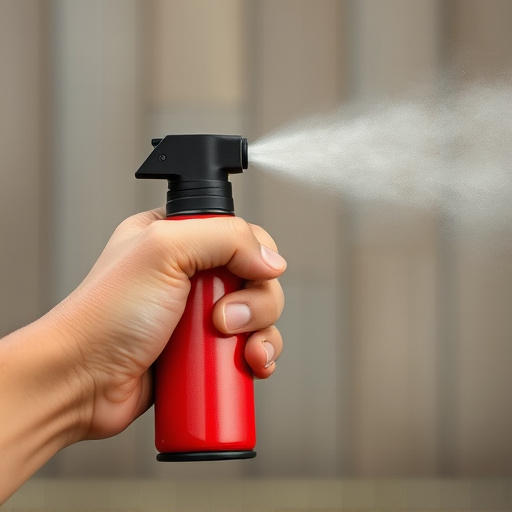
Environmental conditions play a pivotal role in shaping the performance of pepper spray, a common riot control agent. Factors like temperature, humidity, and wind impact its range, persistence, and accuracy. Hot, humid weather speeds up evaporation, while cold temperatures concentrate its potency but increase off-target risks. Law enforcement agencies must adapt deployment strategies based on these conditions to ensure optimal efficacy. Balancing effectiveness and safety involves considering health hazards, training, equipment maintenance, and protective gear. Moreover, the industry is evolving with eco-friendly alternatives and advanced delivery systems to mitigate environmental impact, addressing the Environmental Conditions Affect Pepper Spray in modern crowd control practices.
“Uncovering the complexities of inflammatory riot control spray, this article delves into its inner workings, effectiveness, and safety implications. ‘Understanding Pepper Spray’ explores the composition and mechanism behind this powerful tool, while ‘Environmental Factors Influencing Pepper Spray Efficacy’ analyzes how various environmental conditions affect its performance. We also shed light on health risks and safety considerations for law enforcement in ‘Health Risks and Safety Considerations for Law Enforcement,’ and look ahead to eco-friendly alternatives and technology trends in ‘Future Innovations’.”
- Understanding Pepper Spray: Composition and Mechanism
- Environmental Factors Influencing Pepper Spray Efficacy
- Health Risks and Safety Considerations for Law Enforcement
- Future Innovations: Eco-Friendly Alternatives and Technology Trends
Understanding Pepper Spray: Composition and Mechanism
Pepper spray, a popular riot control agent, is a chemical compound designed to cause temporary blindness and severe irritation, disorienting individuals and facilitating crowd control. Its primary active ingredient is capsaicin, derived from chili peppers. This compound binds to specific receptors in the eyes and respiratory system, triggering an intense inflammatory response. The mechanism ensures that it quickly takes effect, making it a powerful tool for law enforcement agencies worldwide.
Environmental conditions play a significant role in the effectiveness of pepper spray. Factors like temperature, humidity, and wind can affect its range, persistence, and impact. For instance, in moist and humid conditions, pepper spray may dissipate faster due to evaporation, reducing its effective range. Conversely, cold temperatures can cause the spray to become more concentrated and potent but also increase the risk of freezing when sprayed directly onto skin or eyes. Understanding these variables is crucial for optimal deployment during different scenarios.
Environmental Factors Influencing Pepper Spray Efficacy
The effectiveness of pepper spray, a common tool in riot control, can be significantly influenced by various environmental conditions. These factors play a crucial role in determining its range, accuracy, and overall impact during law enforcement operations. Environmental conditions such as temperature and humidity directly affect the spray’s aerosolization and dispersion. In hot and humid environments, the spray tends to evaporate more quickly, potentially reducing its effectiveness over longer distances. Conversely, colder temperatures can cause the spray to remain in a more concentrated form, allowing for better targeting but also increasing the risk of off-target effects.
Wind patterns are another critical element; strong winds can carry pepper spray away from intended targets, rendering it less precise and effective. The presence of rain or fog can also impact its performance, as these conditions can reduce visibility and alter the spray’s trajectory. Understanding these environmental factors is essential for law enforcement agencies to ensure optimal deployment strategies, ensuring that pepper spray remains a reliable tool in diverse and dynamic scenarios.
Health Risks and Safety Considerations for Law Enforcement
Law enforcement agencies must prioritize officer and civilian safety when employing inflammatory riot control spray dispensers, especially considering the potential health risks associated with pepper spray. The effectiveness and impact of pepper spray can be significantly influenced by various environmental conditions, which in turn affect its safety profile. High temperatures and humidity levels can cause the chemical concentration to dissipate faster, potentially reducing its potency but also minimizing inhalation risks for both officers and bystanders. Conversely, cold weather may result in a longer-lasting effect due to slower evaporation, yet it increases the risk of frostbite or hyperthermia if not used properly.
Additional safety considerations include proper training for officers on spray application techniques, de-escalation strategies, and post-spray care. Regular maintenance and inspection of spray dispensers are crucial to ensure they function correctly. Additionally, providing personal protective equipment like respirators can mitigate health risks in challenging environmental conditions. Understanding the specific chemical composition and potential adverse effects of different pepper spray formulations is also essential for law enforcement personnel to make informed decisions during high-pressure situations.
Future Innovations: Eco-Friendly Alternatives and Technology Trends
The future of riot control technology leans towards a more eco-conscious direction, driven by the need to address the environmental impact of current formulations and delivery methods. In recent years, the industry has witnessed a growing demand for alternative solutions that minimize the harmful effects of traditional pepper spray on both rioters and the surrounding environment. Researchers are exploring sustainable options, focusing on natural ingredients and biodegradable carriers. These innovations aim to reduce the toxicity and persistence of chemical agents, ensuring better safety for law enforcement officers and minimizing environmental contamination during disturbances.
One prominent trend is the development of plant-based formulations that harness the power of natural compounds. By utilizing extracts from pepper plants (Capsicum species) and other botanicals, scientists create potent yet biodegradable riot control agents. Such eco-friendly alternatives promise to deliver effective results while reducing the negative environmental conditions often associated with conventional pepper spray. Additionally, technological advancements in delivery systems, such as improved aerosolization techniques and targeted application methods, further contribute to a more precise and less disruptive use of force during crowd control operations.
In conclusion, while pepper spray has been a staple in riot control for its immediate impact, understanding the intricate factors like environmental conditions affecting its efficacy is crucial. As we move forward, exploring eco-friendly alternatives and embracing technological advancements will not only enhance safety but also ensure law enforcement agencies have versatile tools tailored to modern challenges. By balancing effectiveness with responsible use and innovation, we can navigate complex situations more effectively while mitigating health risks for both officers and civilians.